

Creative Repertoire Groupings for Young Pianists
When planning repertoire for students, piano teachers usually spend time thinking about sequence. We carefully choose pieces that introduce new technical skills, reading concepts, expressive elements, and other musical demands in an order that is optimally challenging. Often, we also aim for contrast between pieces so that students experience different styles, characters, and moods.
This year, I’ve been experimenting with adding another layer to this process by grouping repertoire through shared themes and narrative connections, allowing multiple (and sometimes otherwise unrelated) pieces to feel connected as part of a larger musical idea.
I suspect some of my enjoyment of this process comes from the same part of my brain that loves the New York Times Connections game. Both involve looking at separate elements, noticing patterns, and asking what hidden thread might link them together. In repertoire planning, that thread might be narrative, atmosphere, gesture, character, motion—the list goes on.
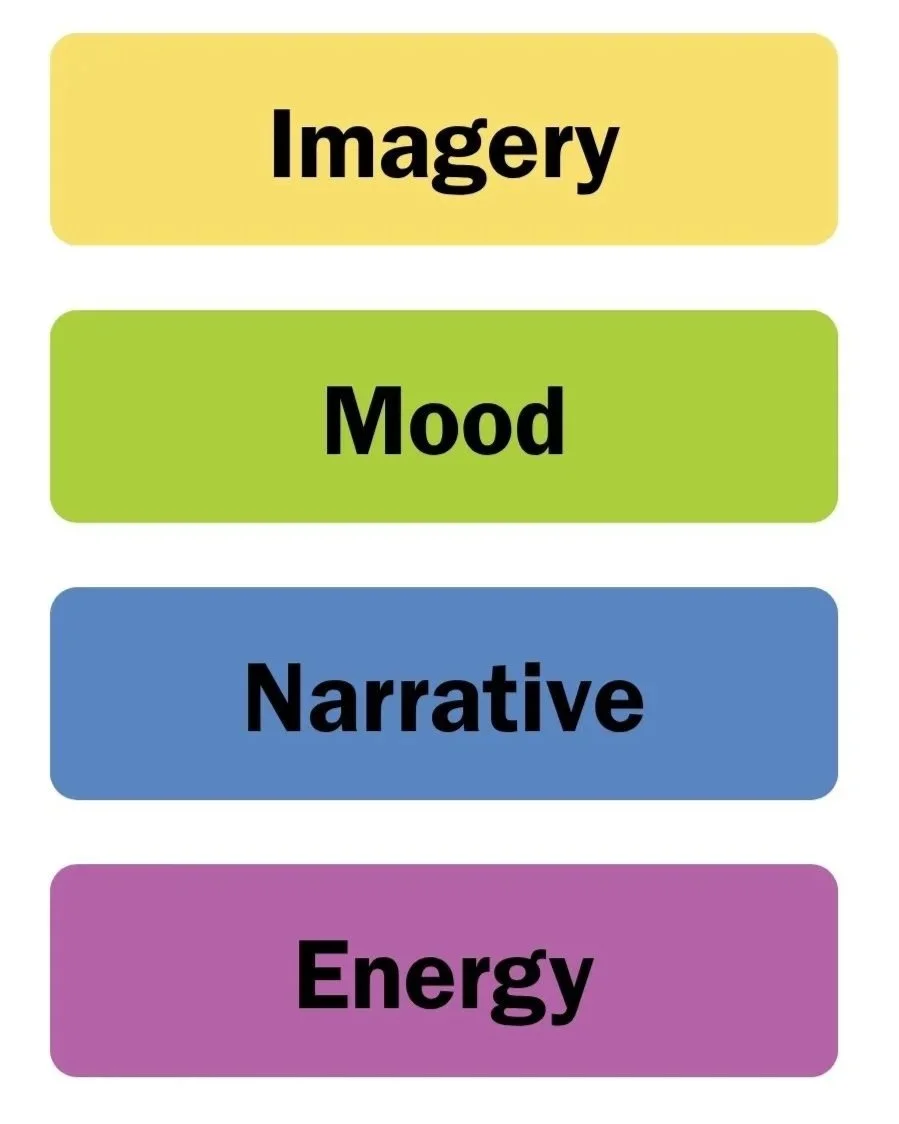
I know I cannot be the only teacher who has been dying to incorporate Connections in lessons!
The idea of connecting pieces through narrative is not new. Composers have been doing this for centuries through collections like song cycles and character pieces that unfold across a larger expressive arc. For young pianists, thematic repertoire pairing allows them to experience something similar to a song cycle at an appropriate level and scale.
Sometimes narrative links pieces, and common threads may also stem from imagery or emerge from shared stylistic elements. Themes may even arise from starkly contrasting elements.
These are some real-life examples of repertoire groupings that students are enjoying this spring:
narrative
Arachne (Scott Price) and Tarantella Op. 14 No. 8 (Frank Lynes)
Arachne is inspired by the figure from Greek mythology who challenged the goddess Athena to a weaving contest. According to the myth, Arachne’s skill was so great that the envious Athena transformed her into a spider, condemning her to weave forever.
Historically, the tarantella is a fast Italian dance associated with the legend of tarantism—the belief that someone bitten by a spider needed to dance energetically in order to purge themselves of the venom. The pieces are connected by myth and imagery of spiders, and we are imagining that Arachne herself is the spider whose bite spurred the dance in Tarantella.
When students imagine connections like these, they give themselves a springboard for more vivid expression. The delicate gestures and woven texture of Arachne evoke the careful spinning of a web; the whirling energy of the tarantella suggests the frantic dancing following the spider’s bite. Thinking about this shared imagery encourages students to make interpretive decisions that highlight each piece’s individual character while illuminating the larger overarching narrative.
Imagery
Etude in A Minor, “Raindrop” (Phillip Keveren) and Water Lilies (Scott Price)
In one pairing, a short etude depicting raindrops leads into Water Lilies by Scott Price. When students play these pieces in sequence, the imagery begins to connect: the small droplets of rain gradually gather into a still pool where lilies float languidly on the surface.
Thinking about this connection encourages students to listen carefully for tone color and phrasing. The delicate, consistent articulation of the raindrops gives way to the more sustained, flowing sound world of the second piece, helping students explore how musical gestures can evoke different aspects of the same natural scene.
Character pairings
Tiger in a Tropical Storm (Catherine Rollin), Curious Cat (Teresa Richert), and Sleepy Little Kitten (Linda Niamath)
Character grouping also encourage students to explore a shared theme from multiple perspectives; they can begin to notice how performers can paint different shades of personality within an imaginative world.
In Tiger in a Tropical Storm, the character is dramatic and powerful, but controlled—we are tasked with creating suspense as the tiger hunts. By contrast, Curious Cat captures the alertness, playfulness, and quick shifts of attention that a housecat would have; it asks the student to think about both consistency and subtle changes in mood and tone color as the piece moves through different harmonies. Sleepy Little Kitten turns toward softness and repose, requiring a completely different kind of listening and touch while maintaining one aesthetic throughout.
MOTION and energy
Dream Journey (Christine Donkin) and Fire Dance (David Karp)
In Dream Journey, the sense of motion feels spacious, and ever-unfolding. The music suggests travel through an imaginative landscape with easygoing direction. It is gently propulsive, asking for forward motion that still leaves time to breathe and savor the end of each phrase. Fire Dance is immediately and perpetually energetic and acute—not only awake, but on-edge. Its rhythmic vitality and accents make for vivid, kinetic energy. The student must channel momentum differently, using precision, articulation, and controlled intensity to create drive.
By working on these pieces as a pair, students are broadening their understanding of how music can move and what that movement can mean—and even delving into the physical technical movements we make to achieve a certain sound. Together, they help students experience energy not as a single expressive category, but as something connected to musical character and to our bodies.
When we group repertoire through theme, imagery, or narrative, we give students a larger artistic world to inhabit. Not every repertoire choice needs to fit into a larger narrative arc, of course. But when a connection does emerge, it can enrich the student’s experience in surprising ways and pieces become part of a broader expressive landscape. When immersed in that landscape, students are more free to play imaginatively and discover details that give music meaning.