Exploring Piano History Through Equal Measures
Many of this year’s Saturday group classes will feature a new theme! Each class will include activities from Equal Measures, a piano history and listening project I’ve been developing for my students for over two years now.
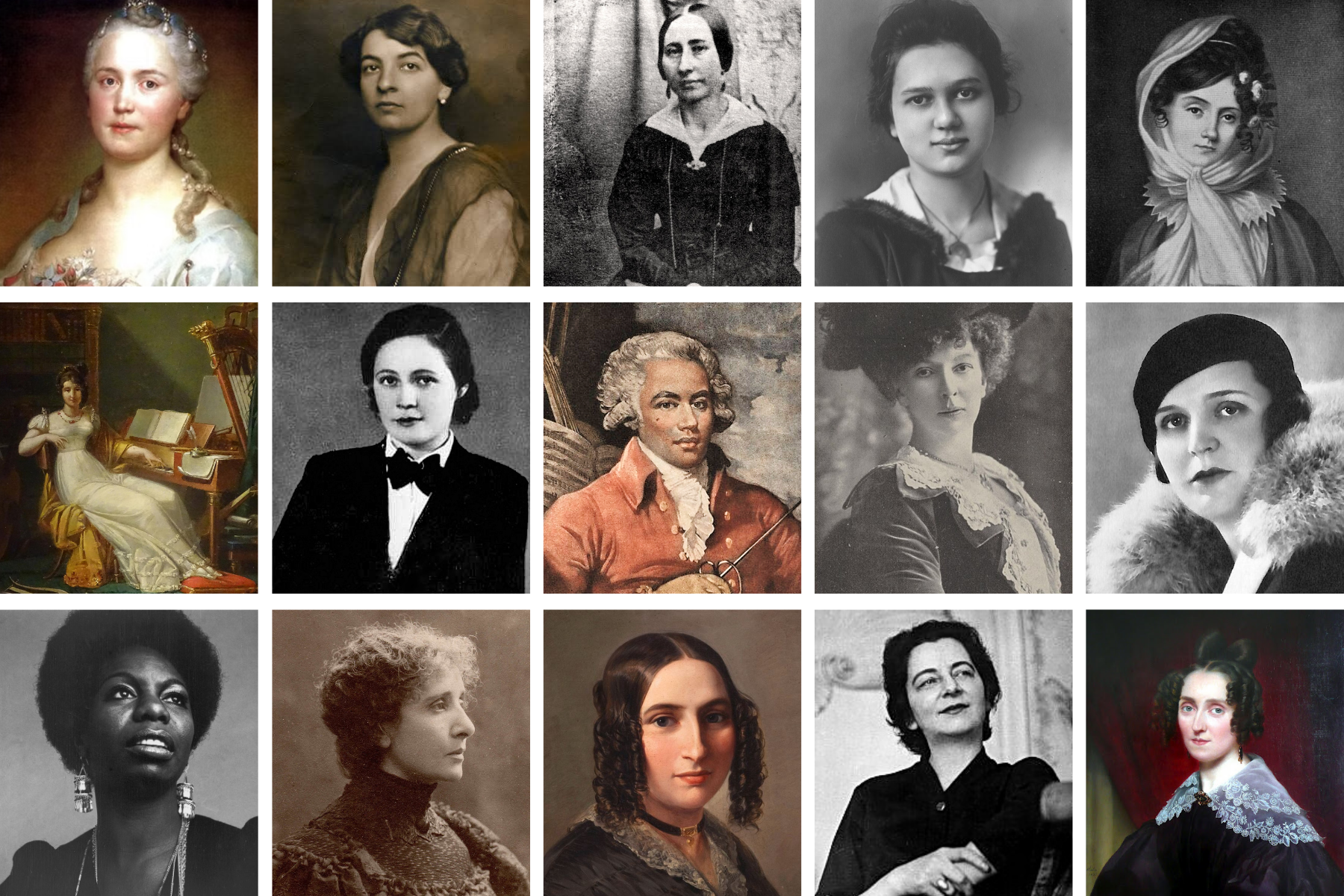
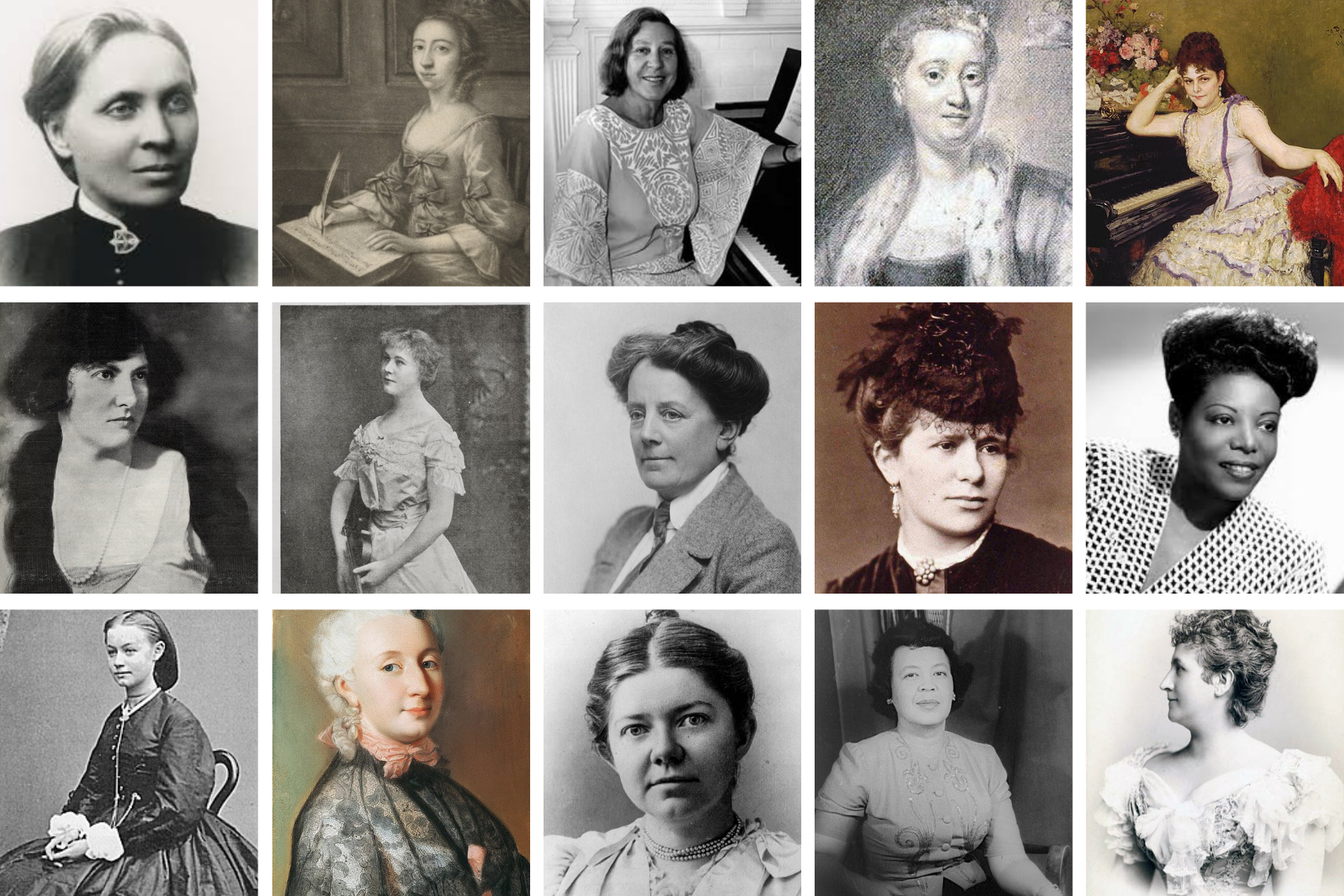
When I began making a conscious effort to represent an equal number of men and women composers in my studio’s Composer of the Month programming, I unearthed a huge amount of piano repertoire by women. Equal Measures became an outlet for what I was discovering—not only about women composers, but also about how to help students actively listen to unfamiliar music.
The goal of Equal Measures is simple: I want students to interact with more music written by historically underrepresented composers.
I want more of that music to be by women, in particular, because women composers were always there. They studied, performed, taught, published, composed, and participated in the musical world of their time, even when they were later left out of the version of music history many musicians learned.
I also want students to develop a practical blueprint for engaging with music they haven’t heard before—to know how to listen more closely, notice what is happening, describe what they hear, and connect it to musical ideas they already understand. And they can practice doing this with music both at and above their own playing level!
Built Around the Ways Students Already Learn
Every Equal Measures activity has been shaped by what I already see students doing in lessons: what captures their attention, what they naturally gravitate toward, the language they use to describe music, the questions they ask, and the kinds of activities that have already helped musical ideas click.
Students often understand more than they initially have the vocabulary to explain, and their ways of describing sound in their own words are often uncannily accurate. They may describe a passage as stormy, floating, heavy, sparkly, or like two people talking. Those descriptions are not something to dismiss on the way to “correct” musical terminology, but rather a starting point for learning how to evaluate what they hear.
Equal Measures builds from those natural responses through listening, comparison, drawing, storytelling, movement, improvisation, discussion, and experimentation. The activities are designed to make substantial musical and historical ideas approachable without reducing them to trivia or oversimplified stories.
Guided by the elements of music
Equal Measures is also organized around select elements of music: harmony, melody, rhythm, texture, form, dynamics, and timbre. These categories give students a practical way to investigate new music without requiring advanced knowledge. Instead of asking only whether they like a piece, students can ask more specific questions. What is the melody doing? Is the texture sparse or full? Are changes in dynamics gradual or sudden? What kinds of patterns repeat? How does the sound of the instrument affect the character of the music? Can we make the piano sound like something else—bells, brass instruments, or a guitar?
The same framework can be used across different eras, styles, composers, and levels of repertoire. As students compare what they hear, they begin to notice which musical features remain consistent, which change over time, and what helps give each style its distinctive sound.
The elements of music also provide a bridge between listening and playing. A student who notices articulation, texture, form, or dynamic shape in a listening example can begin looking for those same features in real-life repertoire. Historical listening can then become something students apply directly to their own learning rather than something that sits separately from their weekly lessons.
With all of that said, students need plenty of short preparatory listening experiences before they are asked to separate and describe the elements of music, starting with differentiating rhythm, beat, pitch, and dynamics—the most commonly confused elements. Even then, I’ve found that listening activities work best when students focus on only one or two elements at a time.
Informed by Slow Looking
This work is also informed by Shari Tishman’s concept of Slow Looking, an approach to learning through patient, sustained observation. Slow Looking asks learners to remain with something long enough to move beyond an immediate first impression, notice details, develop questions, and revise their understanding as new observations emerge.
Although Tishman often writes about looking closely at art, objects, texts, and ideas, I find the same principle useful for listening as well. Music passes quickly, and students can easily feel that they either understood a piece immediately or missed their opportunity. Equal Measures activities will create reasons to return to a piece, listen again with a more focused question, and discover something that was not apparent the first time.
Spanning Eras and Styles
Throughout the year, we’ll work our way through piano history by listening to a broad range of composers and investigating how the elements of music change across eras and styles, comparing and contrasting musical elements to discover what gives different kinds of music their distinctive character. They might listen for the way a melody moves, notice whether changes in volume are gradual or sudden, compare a thin texture with a fuller one, trace the return of a musical idea, or describe the color created by an instrument or combination of sounds. Students will practice listening for musical evidence and using what they hear to make thoughtful comparisons, working first with selections that are more starkly different from each other (e.g. a Bach prelude and a Debussy prelude) and later comparing them.
Following the Changing Keyboard
We’ll also trace the development of the keyboard itself, from the harpsichord and clavichord through the fortepiano to the modern piano. This is consistently one of the parts of music history that students find most fascinating. They are eager to know why early keyboards look and sound different, how their mechanisms work, why the piano grew larger and louder, and when pedals became part of the instrument.
As the keyboard changed, composers and performers gained new possibilities. Changes in range, construction, volume, sustain, touch, and pedal mechanisms affected what could be written and how it could be played. Hearing those differences helps students understand that piano music was not created for one unchanging instrument; the history of the repertoire is the history of an instrument being continually expanded.
Big Ideas at Every Playing Level
Regardless of an individual student’s playing level, the central habits of Equal Measures remain the same: listen carefully, notice specifically, describe honestly, compare thoughtfully, and apply what you discover in an age and level appropriate way. While I make a point to include student-level repertoire, I’ve found that students genuinely enjoy exploring above their playing level. Sometimes this means focusing on excerpts that are especially representative of a composer or style instead of entire works.
WHAT I HOPE STUDENTS TAKE WITH THEM
At the end of the year, I’m much less concerned with how many names, dates, or style characteristics students can remember than with what happens the next time they hear something new. My hope is they listen for a little longer, notice something specific, and ask questions. I hope they recognize that there is always more to hear on a second listen. And, most of all, I hope they come away knowing that the history of piano music and classical music, in general, is much bigger—and much more interesting—than it may initially seem.